The Productivity Trap
Somewhere along the way, busy stopped being a state and became an identity. This is how that happened — and what it is quietly costing you.
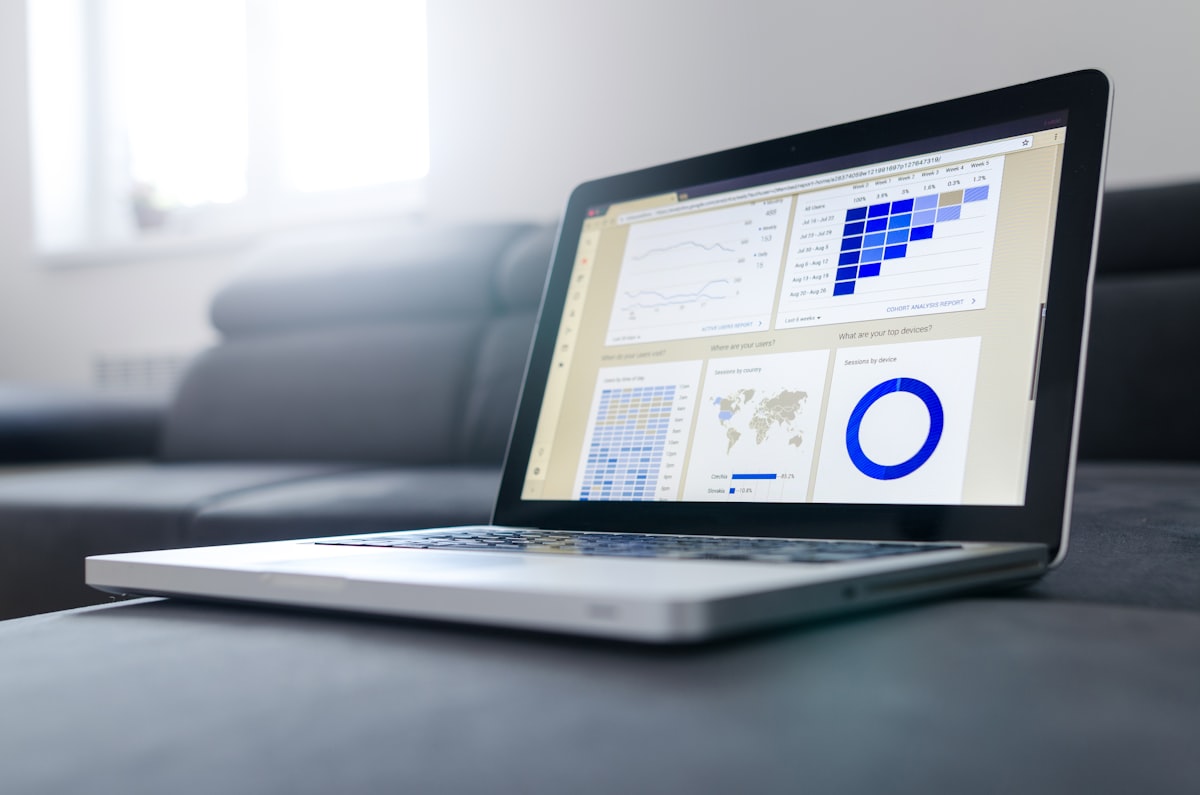
Somewhere in the last three decades, busy became a status symbol. Not a temporary condition — an identity. Ask someone how they are doing and "busy" is now a perfectly complete answer, delivered with a particular mixture of exhaustion and quiet pride that signals something specific: I am needed, I am in motion, I matter. We have built a culture that treats constant productivity as virtue, stillness as waste, and rest as something that must be earned and is rarely deserved. And the psychological cost of this — invisible precisely because it has been so completely normalised — is enormous.
This is not a post about time management. It is about something more fundamental: how busyness became a way of defining oneself, why that definition is so hard to escape, and what it costs when the doing never stops long enough for the being to catch up.
Section 01 — Cultural History
How Busyness Became the New Status Symbol
For most of recorded human history, leisure was a marker of status, not idleness. The aristocracy did not work — that was the entire point of being aristocratic. Manual labour belonged to the working class. Intellectual and physical ease signalled wealth, power, and social elevation. To be visibly busy was to announce that you were subordinate to someone else's demands.
This inversion — leisure as low-status, busyness as high-status — is historically recent, and it happened in stages. The sociologist Max Weber traced the first phase to the Protestant Reformation, which reframed industriousness as moral virtue: hard work as evidence of godliness, idleness as sin. The industrial revolution encoded this into the structure of the economy. The knowledge economy completed the transformation, removing the physical boundaries that once separated work from life. When the instrument of your work is your mind, there is no clear point at which you stop working. You can always be thinking. You can always be planning. The boundary collapsed, and busyness expanded to fill all available space.
Social media added the final, most powerful element: busyness became performable and visible. You can now broadcast your 5am start, your back-to-back calendar, your eighteen-hour stretch. Hustle culture — the glorification of maximum effort, minimum rest, and sleep-as-weakness — found in social media a perfect amplifier. Busy is no longer just what you do. It is who you are, displayed for an audience, reinforced by their responses.
Section 02 — Neuroscience
The Default Mode Network: Why Your Brain Needs to Do Nothing
There is a network of brain regions that activates specifically when you are not engaged in any external task — during rest, mind-wandering, and undirected thought. Neuroscientists call it the Default Mode Network, and it is one of the most important and most misunderstood systems in the brain.
Far from being idle, the DMN is extraordinarily active. It is where creativity and insight emerge — the "shower thought" phenomenon is real, not accidental; idle minds make connections that focused minds miss. It is where empathy and theory of mind are processed: your capacity to understand how other people think and feel operates primarily through the DMN. It is where self-reflection and identity consolidation occur, where future planning and scenario modelling happen, where the events of the day are integrated into a coherent sense of self. It is, in short, where your depth lives.
When you are always busy — always consuming, always producing, always responding — the Default Mode Network never activates. You are perpetually in task mode: responsive, reactive, external. The creative synthesis that requires internal quiet never happens. The self-reflection that requires stepping back from the doing is never permitted. You produce more activity while becoming, in a meaningful sense, less.
"The most creative and insight-driven work your brain does happens when you're not trying. Busyness doesn't crowd out laziness. It crowds out depth."
Section 03 — Psychology
Busyness as Avoidance
In a revealing series of studies, the behavioural scientist Christopher Hsee at the University of Chicago presented participants with a simple choice: spend a waiting period doing nothing, or find a reason to be busy. The majority chose to be busy — even when they acknowledged that the task was pointless and that doing nothing would likely make them happier. The conclusion was striking: many people are not busy because they have to be. They are busy because they are uncomfortable with the alternative.
Stillness creates space for the thoughts that busyness keeps at bay. The unresolved grief. The uncertainty about direction. The gap between who you are and who you thought you might be by now. The question of whether what you are spending your days on is actually what you would choose to spend them on. These are not pleasant thoughts, and busyness is an extraordinarily effective mechanism for not having them.
What makes this particularly powerful is that it is socially rewarded. Unlike alcohol, substances, or other avoidance strategies that carry stigma, busyness is admired. It is celebrated in performance reviews, praised by peers, and held up by entire industries as the path to success. It is arguably the most socially acceptable form of avoidance available. And that social reward makes it self-reinforcing in ways that other avoidance strategies are not.
Section 04 — The Evidence
The Productivity Paradox: When More Work Produces Less

What Research Actually Shows About Long Hours and Output
- The 50-hour ceiling. John Pencavel's analysis at Stanford of WWI munitions workers — some of the most carefully studied labour data in history — showed that output per hour fell sharply beyond 49 hours per week, and that workers doing 55+ hours produced statistically no more than those doing 50. The extra hours were economically and physiologically expensive waste.
- The multitasking illusion. The brain does not multitask. It task-switches — and every switch carries a cognitive cost. Research estimates that switching between tasks consumes approximately 25% of productive time in a typical knowledge worker's day. The person who has twelve browser tabs open, answers messages mid-task, and "multitasks" across meetings is not working efficiently. They are burning cognitive resource on transitions.
- The 4-day week evidence. Microsoft Japan implemented a 4-day work week with no reduction in pay in 2019. Productivity increased by 40%. The Icelandic government trials (2015–2019) covering 2,500 workers produced the same finding. The UK's 4-day work week pilot in 2022, covering 61 companies, found that 92% intended to maintain the model. Output was maintained or improved across almost all participants.
- Elite performance patterns. Alex Soojung-Kim Pang's research into consistently high-performing individuals across history — Darwin, Dickens, Poincaré, Trollope — found a striking pattern: almost all worked in focused, relatively short sessions of three to five hours and protected their rest and recreation deliberately. They were not lazy. They were efficient in a way that constant busyness makes impossible.
- Deep work scarcity. Cal Newport's research identifies deep work — cognitively demanding, distraction-free, high-value thinking — as increasingly rare and increasingly valuable. The average knowledge worker spends the majority of their day in shallow work: email, meetings, coordination. Deep work requires protected time and mental clarity that busyness systematically destroys.
Section 05 — Redefining
From Busy to Effective: A Different Measure

The distinction that changes everything is simple to state and genuinely difficult to internalise: busy means doing many things. Effective means doing the right things well. These two states are not the same, they do not produce the same outputs, and they do not feel the same from the inside — although busyness has become so normalised that many people no longer have a reference point for the alternative.
Deliberate rest — a concept Pang draws from the study of high performers — is not the absence of work. It is a distinct, active investment that replenishes the cognitive and creative resources that work depletes. Walking, reading for pleasure, unhurried conversation, time in nature, genuine play — these are not indulgences. They are the inputs that make sustained, high-quality output possible. Treating them as rewards to be earned only after sufficient productivity is precisely backwards.
The practical question worth sitting with is not "how do I get more done?" It is: how much of what currently fills my day is genuine value creation — the work that matters, the conversations that build something, the thinking that leads somewhere — and how much is the performance of busyness? The appearance of effort. The activity that feels productive without being so.
The most available shift for most people is not a new system or productivity framework. It is doing fewer things with more presence, protecting unstructured time as a serious commitment, and treating recovery not as weakness or indulgence but as the non-negotiable prerequisite for the work that actually matters.
"You were not born to optimise your hours.
You were born to live your life — to think clearly,
create something real, and be present to what matters.
Busyness will always offer itself as an alternative to that."
Next, we turn inward: modern life's effect on identity itself — who you are when the noise stops, and why that question has become harder to answer than it has ever been before.
OMEGΛ is a daily blog at the intersection of psychology, modern culture, and human intelligence. Written for people who want to understand the forces shaping their minds — and navigate them deliberately. Contact: theomega.iq@gmail.com

This article made me rethink how often productivity is measured by activity rather than actual progress. Great insight.
ReplyDeleteGreat 👍
ReplyDelete