The Empathy Deficit
You saw the disaster on your phone, felt something briefly, then scrolled on. And later, maybe in the quiet before bed, you wondered: what happened to me? I used to feel more than this.
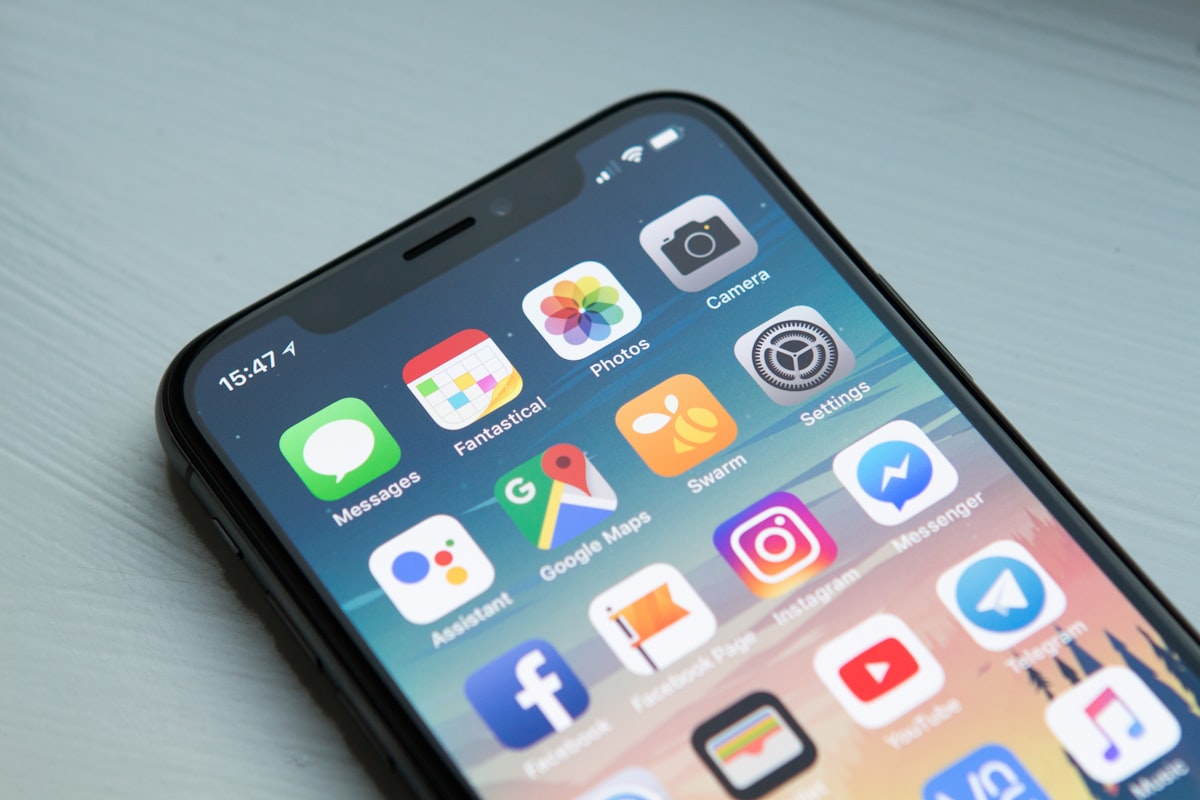
You're eating dinner and a video starts playing on your phone. Somewhere far away, something terrible has happened. Hundreds of people. Real people. You watch for maybe ten seconds. You feel a faint flicker of something. Then you keep scrolling. And that evening, in the quiet, you catch yourself thinking: I barely reacted. What is wrong with me? I used to be more affected by things like that. I used to care more.
Here is what we need you to hear first, before anything else: you are not a bad person. You have not become cold or cruel or indifferent. What you are experiencing has a name, a clear mechanism, and a reason that has nothing to do with your character. It is called compassion fatigue, and it is one of the most widespread and least talked-about psychological effects of living in the age of constant information.
Your empathy did not disappear. It hit its limit. And in a world designed to show you every tragedy, every injustice, and every human crisis happening anywhere on earth, your limit gets reached before you have even finished your morning coffee.
Section 01 — The Limit Nobody Told You About
Empathy Is a Resource, Not a Character Trait
Most of us were raised to think of empathy as something you either have or you do not. A personality feature. A moral indicator. If you feel deeply for others, you are a good person. If you feel less, something is wrong with you.
This is not how empathy works. Empathy is a cognitive and emotional resource. It requires mental energy to activate. It involves real neurological processing: the brain simulating another person's experience, activating the same circuits that would fire if you were going through it yourself. That takes something from you every single time it happens.
This is why doctors, nurses, emergency workers, social workers, and journalists who cover trauma develop compassion fatigue. It is not because they stopped caring. It is because the volume of suffering they are exposed to exceeds the brain's capacity to process it without building protective numbness. The numbness is not apathy. It is a survival mechanism.
The rest of us have been quietly developing the same condition. Not because we work in emergency medicine, but because our phones have made us all witnesses to a global emergency that never ends. There is no knock-off time. There is no commute home from the suffering. It is always there, one thumb-scroll away, waiting for you.
"Your empathy didn't disappear. It ran out. There is a difference. One is a character flaw. The other is what happens when any resource is stretched past its limit without being replenished."
Section 02 — What Screens Are Doing to How We Feel for Each Other
The Information We Lose Through a Screen
Think about the last time someone you love was genuinely upset. Not texting you that they were sad. Actually upset, in front of you. You picked up on things you probably cannot even name. The slight change in their breathing. The way they held their shoulders. The micro-expression that crossed their face before they said they were fine. The specific quality of their voice when they were trying not to cry.
You learned to read all of that from years of being in rooms with people. And it is the richest form of empathic information that exists. Screens cannot transmit most of it. A text cannot carry vocal tone. A video call misses peripheral signals. A post gives you a single crafted surface, with everything underneath it hidden.

Sara Konrath, a researcher at Indiana University, found that empathy levels among college students dropped by approximately 40% between 2000 and 2010. The drop was steepest in the years when smartphone use and social media became widespread. Students were measurably less able to take other people's perspectives and less likely to feel concern for others in distress.
A 40% drop in a single decade. That is not a small cultural shift. That is a structural change in how a generation relates to other human beings. And the primary driver was not that young people had become worse. It was that the mode of communication that was replacing face-to-face interaction was systematically stripping out the very signals that activate empathy in the first place.
We replaced presence with connection, and the two are not the same thing.
Section 03 — The Things We Now Do Instead of Feeling
The Heart Emoji Is Not Empathy
You have probably done this. A friend posts something difficult. They are going through something real: a loss, a breakdown, a moment of genuine vulnerability. You see it. You feel a brief pulse of something. You tap the heart. You keep scrolling.
The heart told them you saw it. It did not tell them you sat with it. It did not create the felt sense of being accompanied in a hard moment. It did not ask them how they actually are. It registered your awareness and immediately moved on, because the platform is designed for volume, not depth, and your attention was already being pulled to the next thing.
We are not saying this to make you feel guilty. We have all done it. We do it daily. The point is that this pattern, repeated across thousands of interactions over years, is changing what we understand empathy to mean. We have gradually come to treat acknowledgement as care, visibility as support, and digital reaction as emotional presence. None of these things are the same.
Section 04 — What This Is Doing to Your Closest Relationships
The Slow Drift You Might Not Have Named Yet
Compassion fatigue does not stay where it starts. It does not remain confined to strangers on the news. It seeps into the relationships that are closest to you, and it does so gradually enough that you may not notice until someone who matters to you tells you they feel like you are not really there anymore.

When you are emotionally depleted from the ambient suffering of the internet, you have less left over for the people in front of you. When your partner comes home frustrated, the thing that should kick in automatically takes a moment longer to activate. When your friend starts telling you about something hard, part of you is already calculating how much emotional energy you have available. These are not conscious choices. They are the downstream effects of a system that has been overdrawn for months.
The drift shows up in specific ways. Less curiosity about what others are actually experiencing. More impatience when conversations go to emotional places. A tendency to solve or reframe quickly rather than just sitting with someone in what they are feeling. A subtle preference for the managed distance of a text over the messier reality of a phone call or a face-to-face conversation.
None of this is dramatic. None of it looks like a crisis from the outside. But the cumulative effect on the people around you, and on your own sense of genuine connection, is real.
Six Things That Might Be More Connected Than You Think
- You feel guilty for not feeling more. Watching a tragedy and feeling numb, then feeling guilty about the numbness. This is compassion fatigue, not cruelty.
- You find yourself solving instead of listening. When someone comes to you with a problem, you move quickly to solutions because sitting with the feeling is uncomfortable. It used not to feel this uncomfortable.
- You know what people posted but not how they actually are. You can tell someone what they shared on their story last week, but you have no idea how they genuinely feel about their life right now.
- Texting feels safer than calling. Voice calls feel like a bigger commitment than they once did, because they require your full emotional presence in real time and you are not sure you have that available.
- You feel oddly relieved when plans get cancelled. Not because you did not want to see the person. Because showing up fully to another human being takes something you are low on.
- You are less moved by things that used to move you. Films, music, stories that once got to you now land differently. The emotional bandwidth that allowed you to be moved has been narrowed by overuse.
Section 05 — Turning It Back On
How to Get Back to Feeling Like Yourself
The good news is that empathy, unlike some cognitive capacities, is highly responsive to the right conditions. It does not take long to start recovering when you change the environment it is operating in.
The single most effective thing you can do is reduce the volume of suffering you consume passively. Not because other people's pain does not matter, but because consuming it at scale through a screen does not help them and does deplete you. Choose your depth of engagement deliberately. Read one story completely rather than scanning thirty headlines. Your emotional response will be fuller, more real, and more likely to result in something other than numbness.
Spend time with people in person. This sounds simple because it is, and we know it is harder than it used to be. But the neurological signals that activate genuine empathy, the ones that a screen cannot transmit, are all present in a room. Ten minutes of actual conversation with someone you care about does more for your empathic capacity than two hours of digital interaction.
When someone in your life is going through something, try resisting the move to solve or reframe. Just ask: what is that like for you? Then wait. Let them answer without immediately filling the space. Sitting with someone in discomfort is the oldest form of empathy there is, and it still works better than anything else.
And give yourself the same. You are allowed to feel overwhelmed by the state of the world without that making you a bad person. You are allowed to limit your exposure to suffering you cannot affect. Protecting your emotional capacity is not selfishness. It is what makes genuine care for the people directly in your life sustainable.
"You did not stop caring. You got full.
There is a difference. And the people who matter to you
need you to know that difference."
Tomorrow we tackle something that is wrecking your days quietly and constantly: decision fatigue. Why by 7pm you cannot choose what to eat for dinner, and what that is actually telling you about where your mental energy went.
OMEGΛ is a daily blog at the intersection of psychology, modern culture, and human intelligence. We write to help you understand the forces shaping your mind, so you can navigate them on your own terms. Contact: theomega.iq@gmail.com


Comments
Post a Comment